Imagine yourself surrounded by the endless plains of the Serengeti, where more than a million wildebeests roam, and witnessing the birth of thousands of wildebeest calves every day during the season. This is the allure of the wildebeest calving season one of Mother Nature’s most awe inspiring spectacles, where new life blossoms amid the wild and unforgiving Serengeti.
There is something fascinating about the wildebeest calving season, when life and death dance in unison on the plains of the Serengeti ecosystem. For wildlife lovers, this season in the Serengeti ecosystem is magical, offering a rare glimpse into the resilience and beauty of the natural world. In just a few weeks of this season, around half a million calves take their first steps on these plains, marking the beginning of their journey in the Great Wildebeest Migration.
When is the wildebeest calving season?
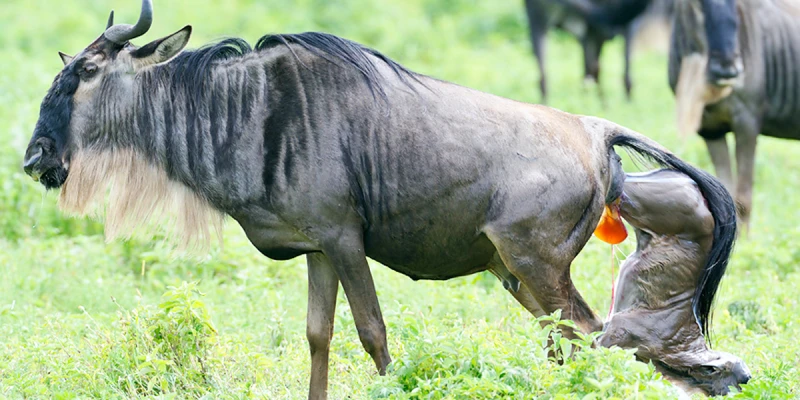
The wildebeest calving season in Ndutu, located in the southern Serengeti ecosystem (Tanzania), is one of Africa’s most remarkable wildlife events. It typically takes place between late January and early March each year, coinciding with the annual Great Migration of wildebeests, zebras, and other herbivores. This area is an ideal place for wildebeests to give birth, and the calving season is a key part of the natural cycle of the Serengeti ecosystem.
Timing and Location
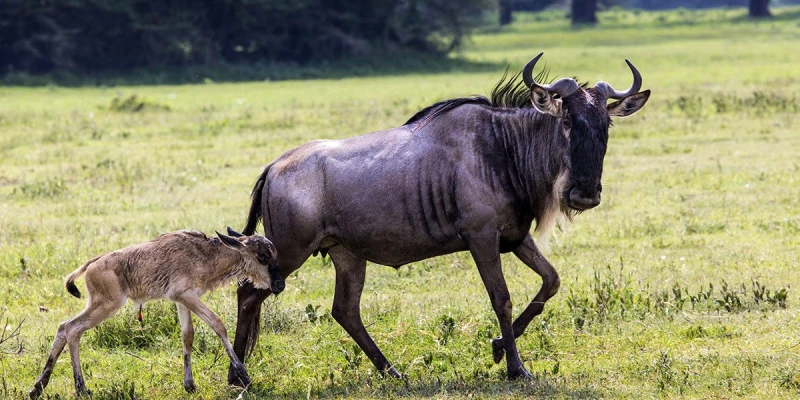
The Ndutu area is located in the southern Serengeti within the Ngorongoro Conservation Area. Every year, millions of wildebeests gather here for a spectacle of mass births. With its vast open plains and short grass, which provide rich nutrients, Ndutu becomes the perfect place for wildebeests to give birth to their calves.
Ndutu Plains
The Ndutu area, located within the Ngorongoro Conservation Area, is the prime spot to witness the wildebeest breeding season. Known for its seasonal lakes and lush forests, Ndutu offers a unique landscape for safari enthusiasts. The nature of the landscape allows safari travelers to get truly close to the wildebeests close enough to capture memories of a live birth with nothing more than a smartphone camera. The size of the herds provides intimate encounters with wildlife as the calves find their feet and learn to navigate their new world.
Southern Serengeti
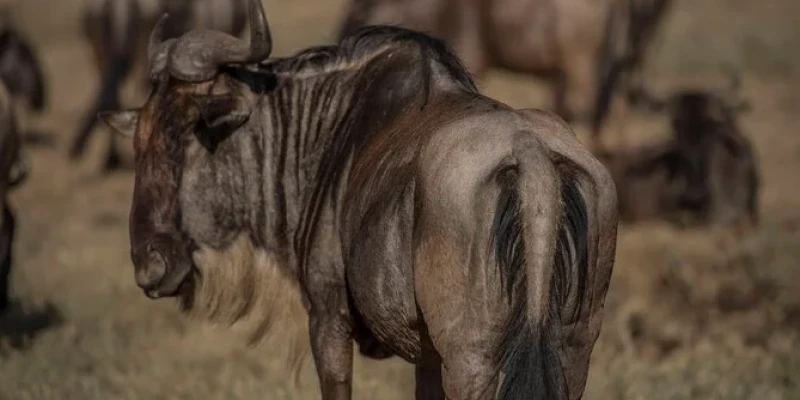
The Southern Serengeti, bordering Ndutu, also plays an important role during the wildebeest breeding season. Here, a mix of open plains and woodlands provides visibility, allowing the wildebeest to spot approaching predators while also offering cover when needed. And it’s not just wildebeest that gather here. Zebras, gazelles, and antelopes also join the spectacle, drawn by the same rich pastures. This massive herd of herbivores forms a vast, moving feast, creating a living landscape filled with the sounds, sights, and rhythms of the wild.
The Birthing Process
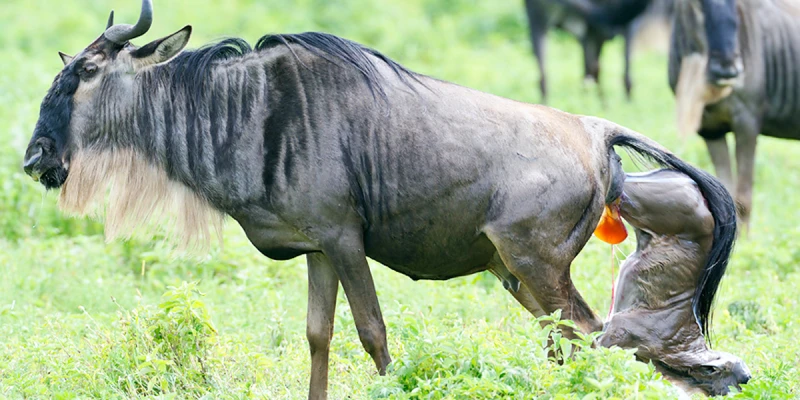
The wildebeest birthing season typically lasts between 2 and 3 weeks, but it peaks between early and mid-February. During this period, approximately 500,000 calves are born in a short span of time. This rapid birth rate ensures the species’ survival, as it overwhelms predators and gives many of the newborns a chance to survive. The timing is crucial because it coincides with an abundance of fresh, nutritious grass in the area, allowing mothers to feed their calves.
The Vulnerable Newborns
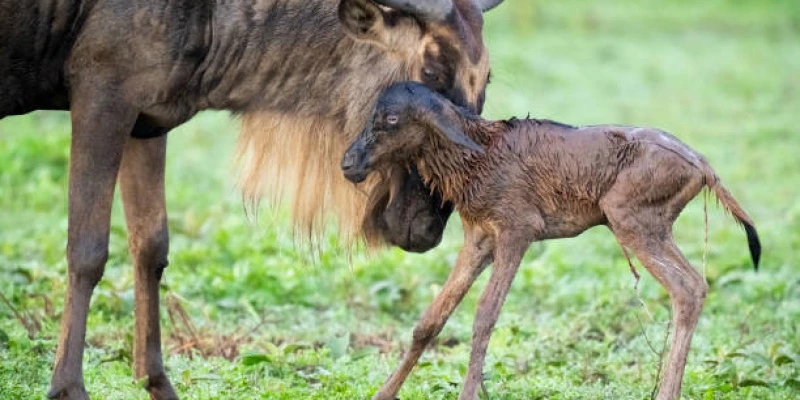
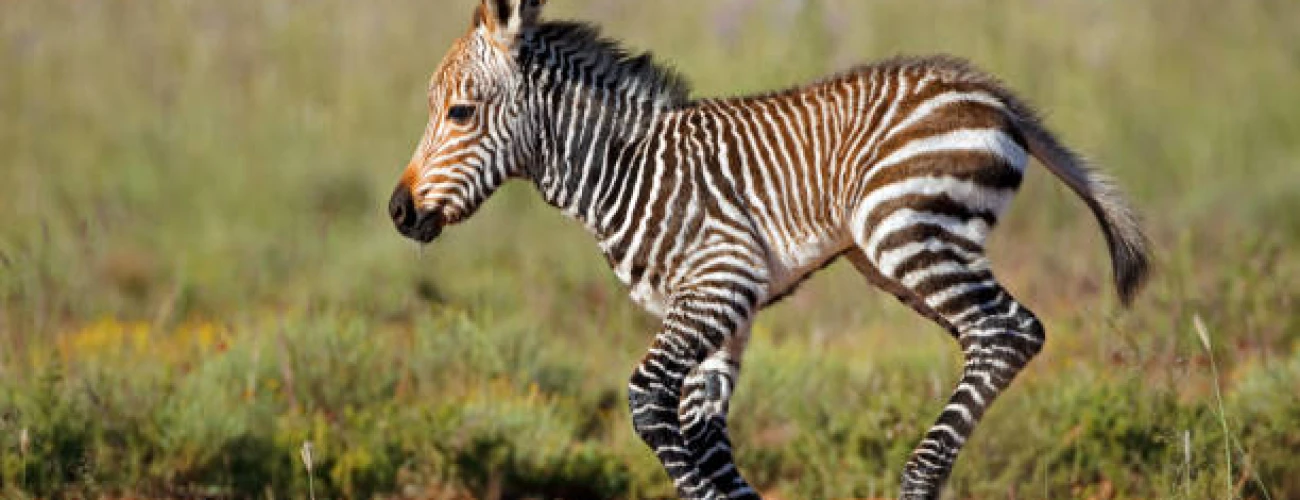
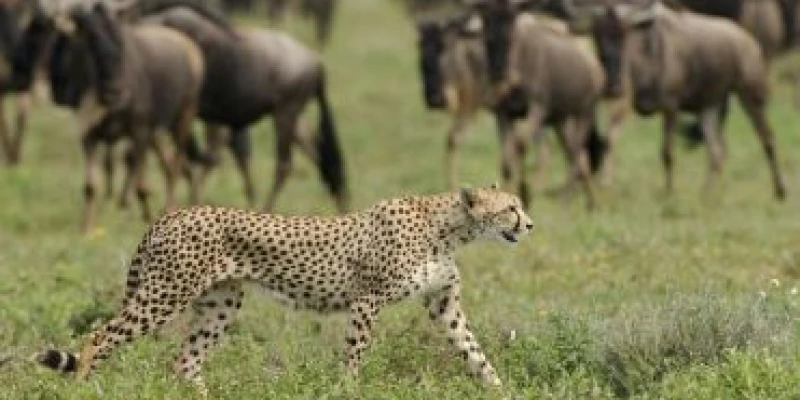
Wildebeest calves are born after eight and a half months of gestation. The calves are able to stand within minutes of birth and begin walking shortly thereafter. However, these newborns are extremely vulnerable to predators, particularly lions, cheetahs, and hyenas. Since the mothers stay close by, they provide protection, but the large number of births makes it difficult for predators to target just one.
Predators prey on the calves, and the survival rate of newborns can be quite low. It is not uncommon for large herds of wildebeests to be targeted by predators during this period, leading to dramatic scenes of life and death on the plains. However, predators also play an essential role in maintaining the balance of the ecosystem by ensuring that only the fittest survive.
A Spectacle of Life
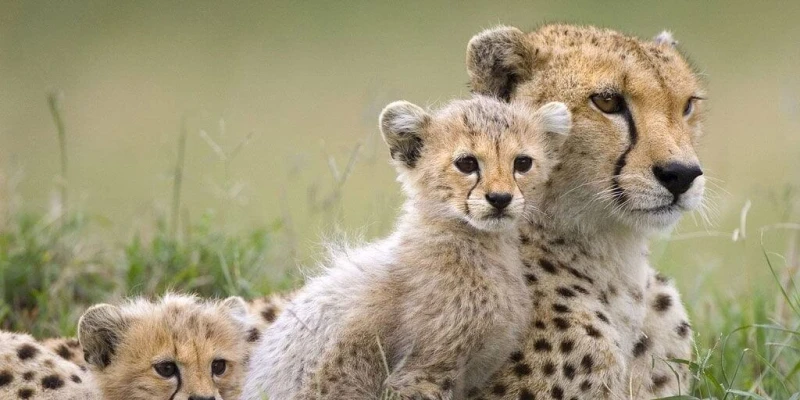
For visitors to Ndutu, the calving season is a breathtaking spectacle. Large herds of wildebeest, with their newborn calves, gather on the plains. The sight of thousands of wildebeests grazing together, amid the cacophony of sounds from the newborns calling out and their mothers tending to them, is one of Africa’s most fascinating experiences. Wildlife enthusiasts, photographers, and tourists from around the world flock to this region to witness this natural phenomenon.
In addition, the calving season is an important time for other animals in the ecosystem. Zebras, gazelles, and other herbivores are also nearby, and predators are drawn to the abundance of prey. This, in turn, attracts large numbers of predators such as lions, cheetahs, and hyenas, creating a thrilling dynamic in the region.
Conservation and Challenges
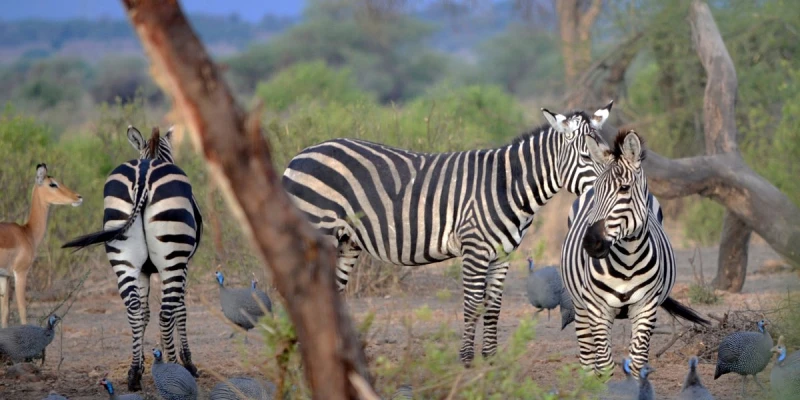
Although the calving season is a magnificent spectacle of nature, it also highlights the challenges facing the region’s wildlife. Habitat loss, climate change, and human encroachment threaten migration routes and the delicate balance of this ecosystem. Conservation efforts by local organizations and authorities are crucial to ensuring that areas like Ndutu remain protected and that the wildebeests can continue their natural cycles of migration and calving.
In conclusion, the wildebeest calving season in Ndutu is a breathtaking spectacle of life, death, and survival. It is one of the highlights of the Great Migration and, for nature enthusiasts, a unique opportunity to witness the raw power of nature in one of the most incredible wild habitats on Earth.