When we picture the African savanna, we often imagine lions hunting, elephants roaming, or giraffes feeding on acacia trees. But behind this dramatic wildlife spectacle is another group of animals performing an equally important job: cleaning up the ecosystem.
Scavengers and decomposers help remove carcasses, consume organic waste, recycle nutrients, and reduce the risk of disease. Together, they form nature’s own cleanup crew.
Vultures — The Ultimate Carcass Cleaners
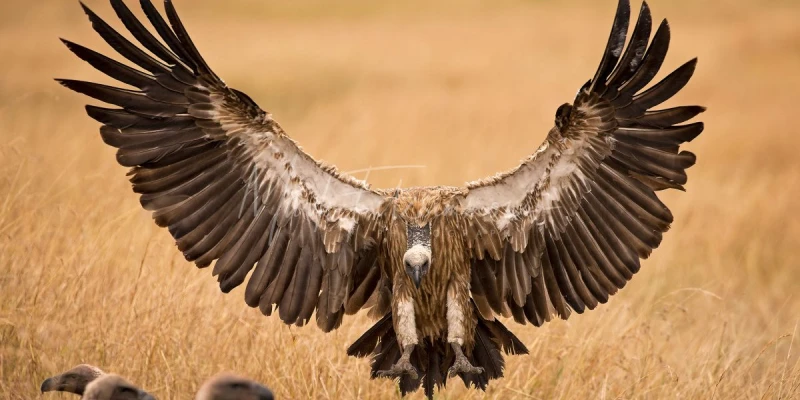
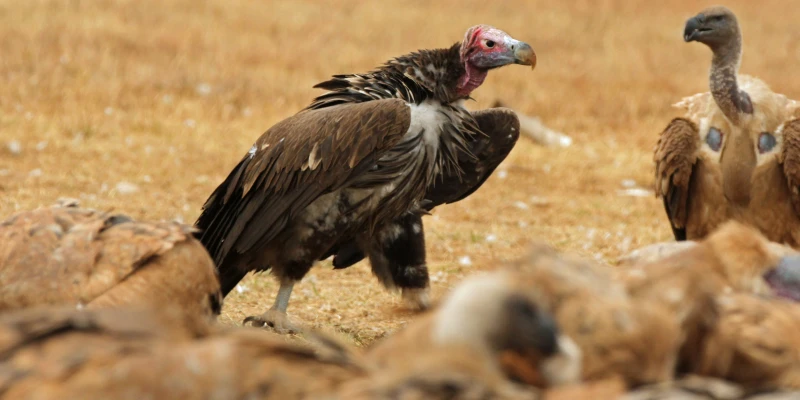
Vultures are among the most important scavengers in the African savanna. Species such as the White backed Vulture can gather around a carcass in large numbers and consume much of the edible tissue remarkably quickly.
Their role goes far beyond simply finding food. By rapidly removing dead animals, vultures help prevent carcasses from becoming breeding grounds for harmful bacteria and other pathogens.
Their powerful beaks and highly acidic digestive systems also allow them to consume parts of carcasses that many other animals cannot safely eat.
Why they matter: Vultures help keep the savanna clean while reducing the potential spread of disease.
Hyenas — Nature’s Powerful Recyclers
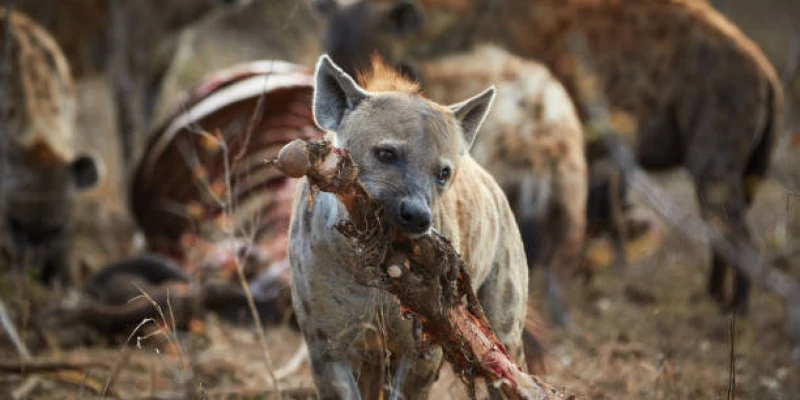
Often misunderstood, hyenas are incredibly efficient members of the savanna cleanup crew. They are both skilled hunters and scavengers, and their exceptionally strong jaws allow them to consume bones and other tough parts of carcasses.
After lions or other predators have fed, hyenas may move in to consume what remains. Their ability to digest much of the carcass means very little goes to waste.
Why they matter: Hyenas help recycle nutrients by turning even tough animal remains into energy and waste that can return nutrients to the ecosystem.
Jackals — Opportunistic Scavengers
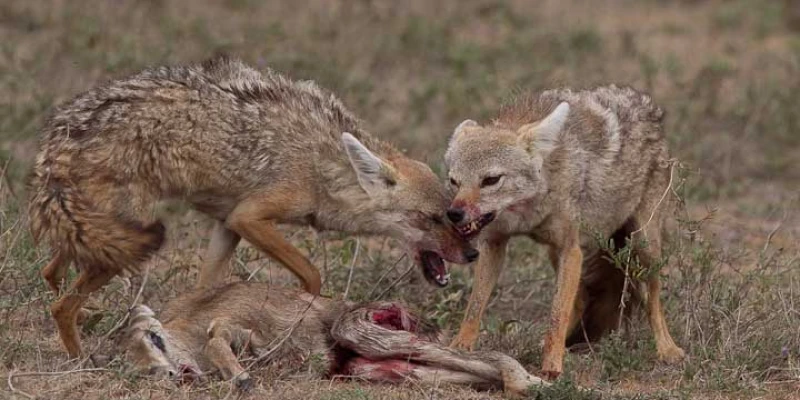
Jackals are smaller than hyenas but play an important supporting role. They are opportunistic feeders that take advantage of carcasses, scraps left by larger predators, and other available food sources.
Their adaptability allows them to survive in environments where food availability can change dramatically.
Why they matter: Jackals help remove smaller leftovers that might otherwise remain in the environment.
Marabou Storks — The “Undertakers” of the Savanna
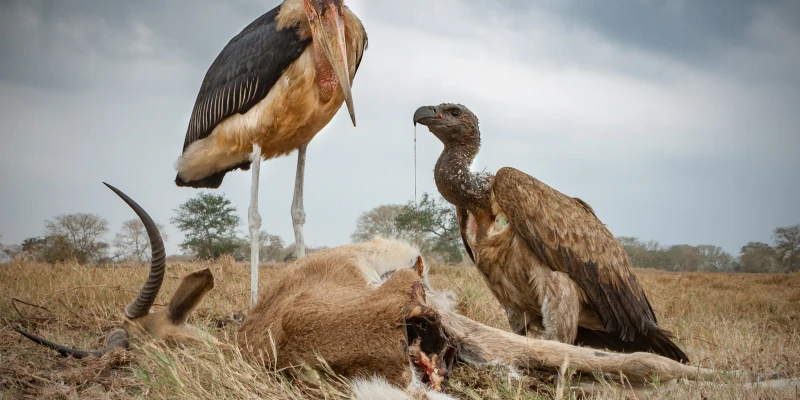
The imposing Marabou Stork is another familiar scavenger across parts of Africa. These large birds can feed on carrion and other organic material, often gathering around carcasses alongside vultures and other scavengers.
Their long legs and large bills are well suited to their scavenging lifestyle.
Why they matter: Marabou storks contribute to the removal of decaying organic matter and participate in the complex chain of scavengers surrounding a carcass.
Dung Beetles — The Waste Recyclers
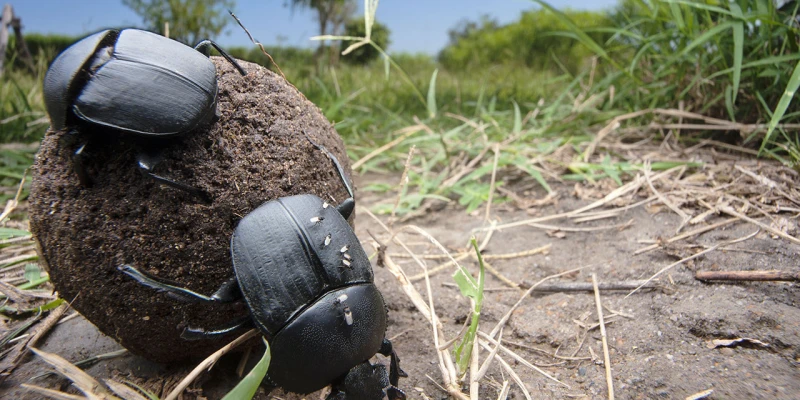
Not all cleanup happens around carcasses. Dung beetles perform another essential job by collecting, moving, and burying animal dung.
As they process dung, they help return nutrients to the soil. Their activity can also improve soil structure and create opportunities for plants to access nutrients.
Why they matter: Dung beetles transform animal waste into a valuable source of recycled nutrients.
Why the Savanna Needs Its Cleanup Crew
Without scavengers and decomposers, dead animals and organic waste would accumulate in the environment. The cleanup crew helps ensure that nutrients do not simply disappear when an animal dies.
Instead, they are transferred through the ecosystem:
Dead animal → Scavengers → Decomposers → Soil nutrients → Plants → Herbivores → Predators
This cycle is one of the reasons healthy savanna ecosystems can continue supporting such extraordinary biodiversity.
Nature’s Teamwork
Vultures may arrive first, hyenas can consume bones and tougher remains, jackals take advantage of leftovers, marabou storks join the scavenging activity, and dung beetles recycle waste. Each animal has a different role, but together they form an efficient natural recycling system.
So, the next time you see a vulture circling overhead or a hyena near a carcass, remember: these animals aren't simply scavengers they are essential workers keeping the African savanna healthy.