The Big Five of Tanzania:
The term “Big 5” was born during the colonial era, when European hunters designated the most difficult and dangerous animals to hunt: lion, African elephant, leopard, black rhinoceros and African buffalo. It was therefore not a classification based on size, but on the danger and difficulty of the encounter. Today, the meaning of the term has been completely transformed. In a context of conservation and wildlife photography, the five animals have become the most sought-after species by travelers who want to capture the quintessential savannah. The sighting of these five animals represents a rite of passage for those exploring East Africa: completing the list means entering into a deep connection with Tanzanian ecosystems, where wildlife observation is never taken for granted. Every sighting, in fact, is an authentic encounter and not a simple attraction.
What Are the Big Five?
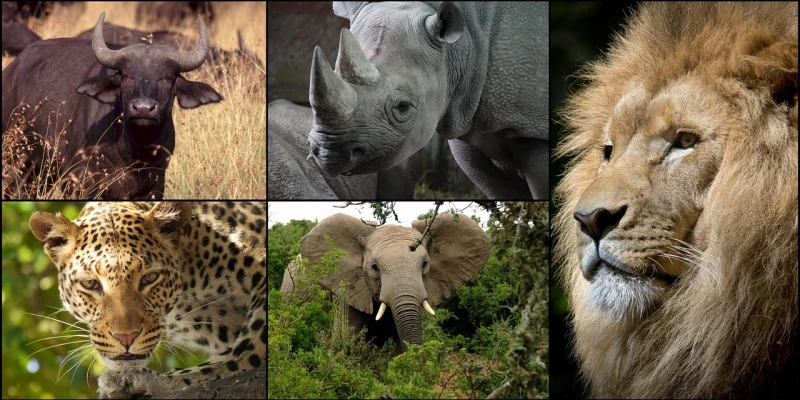
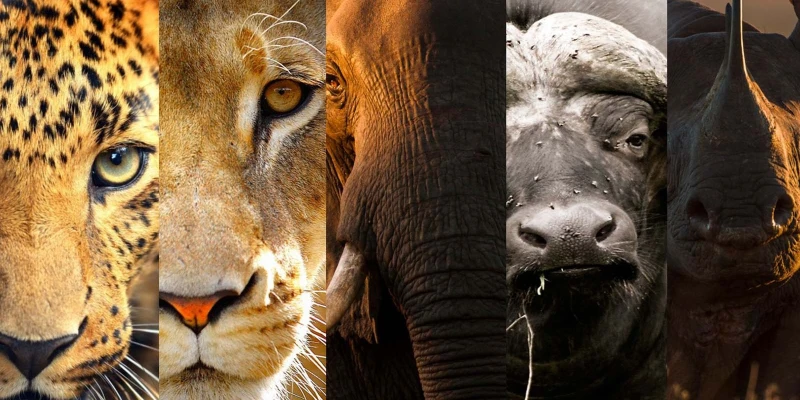
The Big Five include:
African Elephant
African Lion
Leopard
Black Rhinoceros
African Buffalo
Each species plays a vital role in maintaining healthy ecosystems and offers a unique wildlife encounter during a safari.
African Elephant
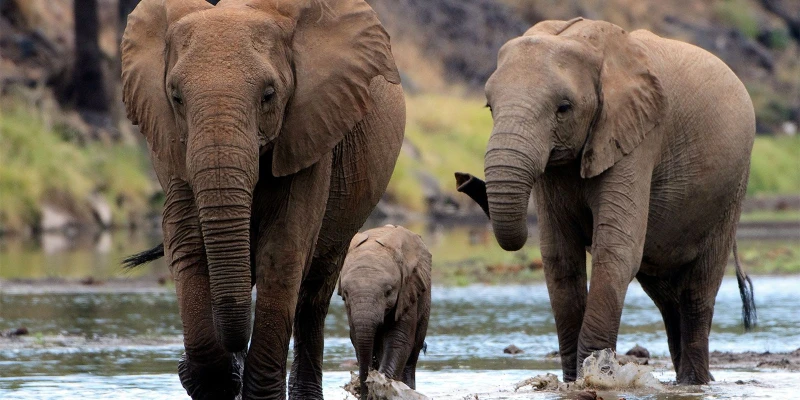
The
African elephant is the largest land mammal on Earth and one of
Tanzania's most iconic animals. Known for their intelligence, complex
social structures, and remarkable memory, elephants live in family
groups led by experienced matriarchs.
One of the best places to
see elephants is Tarangire National Park, famous for its large herds
that often gather along the Tarangire River during the dry season.
Visitors may also encounter elephants in Serengeti National Park and
Nyerere National Park.
Interesting facts:
Adults can weigh more than 6,000 kilograms.
Their trunks contain over 40,000 muscles.
Elephants communicate through low-frequency sounds that can travel several kilometers.
African Lion
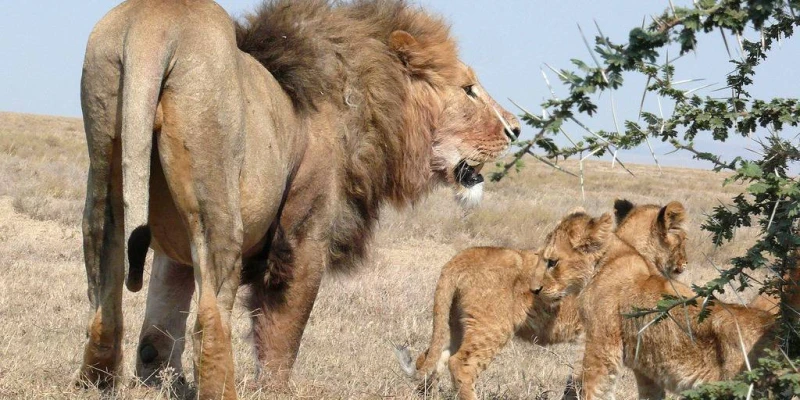
Often
referred to as the "King of the Jungle," the African lion is one of the
most recognizable predators in the world. Lions live in prides and are
among the few truly social big cats.
Tanzania is home to one of
Africa's largest lion populations. Serengeti National Park is renowned
for exceptional lion sightings, while Ngorongoro Conservation Area also
supports a healthy resident population.
Interesting facts:
A lion's roar can be heard up to 8 kilometers away.
Lionesses perform most of the hunting.
Males defend the pride's territory
Leopard
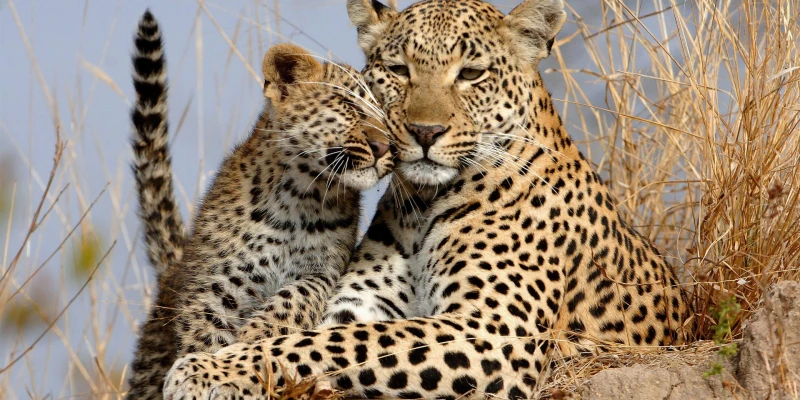
Leopards
are elusive, solitary, and highly adaptable predators. Their spotted
coats provide excellent camouflage, making them difficult to spot
despite being widespread across Tanzania.
Leopards are frequently
seen resting in acacia trees within the Serengeti and along riverine
forests in Tarangire and Lake Manyara National Park.
Interesting facts:
Leopards often drag prey into trees to protect it from scavengers.
They are excellent climbers and swimmers.
Most hunting occurs at dawn, dusk, or during the night.
Black Rhinoceros
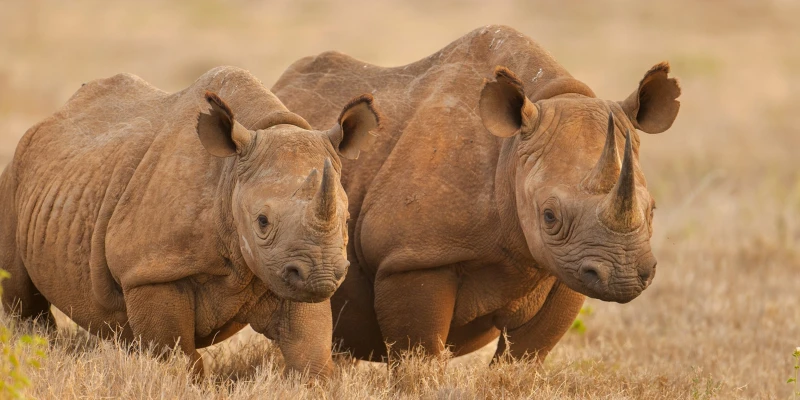
The
critically endangered black rhinoceros is one of Africa's rarest large
mammals. Seeing one is considered a highlight of any Tanzanian safari.
The
best place to spot black rhinos is Ngorongoro Conservation Area, where
conservation efforts have helped maintain a protected population.
Interesting facts:
Black rhinos use their hooked upper lips to browse shrubs and bushes.
They can run at speeds of up to 55 km/h.
Despite poor eyesight, they have excellent hearing and smell.
African Buffalo
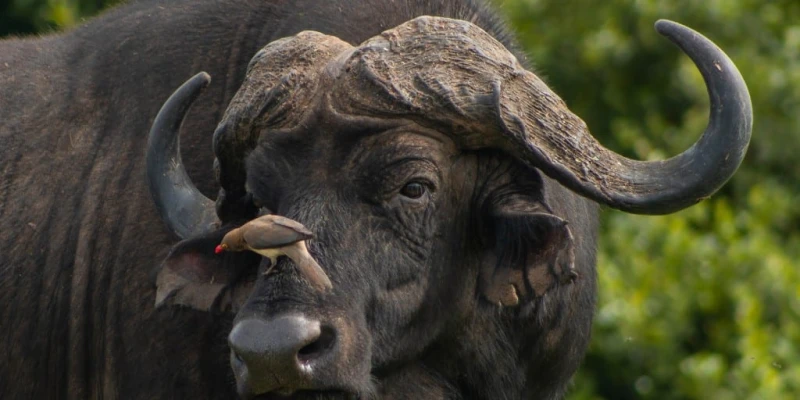
African
buffalo are powerful, unpredictable, and highly resilient animals that
live in herds ranging from a few individuals to several hundred.
They are commonly seen across Tanzania, particularly in Tarangire, Serengeti, and Ruaha National Park.
Interesting facts:
Adult bulls can weigh nearly one ton.
Buffalo are known to protect injured members of the herd.
They often form mixed groups with cattle egrets and oxpeckers that feed on parasites.
Best Places in Tanzania to See the Big Five
Destination:
Serengeti National Park
Ngorongoro Conservation Area
Tarangire National Park
Ruaha National Park
Nyerere National Park
Best Time to See the Big Five
While
wildlife can be viewed throughout the year, the dry season (June to
October) is generally the best time for Big Five safaris. During these
months, animals gather around rivers, lakes, and waterholes, making
them easier to locate.
The green season (November to May) offers lush landscapes, excellent birdwatching, fewer visitors, and
rewarding wildlife viewing, although dense vegetation can make some
animals more difficult to spot.
Responsible Wildlife Viewing
Seeing the Big Five is a privilege, and responsible tourism helps protect these species and their habitats. While on safari:
Maintain a respectful distance from wildlife.
Follow your guide's instructions at all times.
Avoid making loud noises or attempting to attract animals.
Never feed or disturb wildlife.
Support operators committed to sustainable tourism and conservation
Safari Huella to spot the Big 5
For those who want to maximize the chances of spotting all the Big 5, Safaris Huella offers itineraries studied in detail. The 4 Day Tarangire, Serengeti, Ngorongoro Crater Safari offers a complete route in the main parks of the north, while the Great Migration Safari allows you to follow one of the most spectacular natural spectacles on the planet. Those who love to observe the cubs can choose the Safari New Births, a unique opportunity to see the young wildebeests, lions and elephants take their first steps in the savannah.