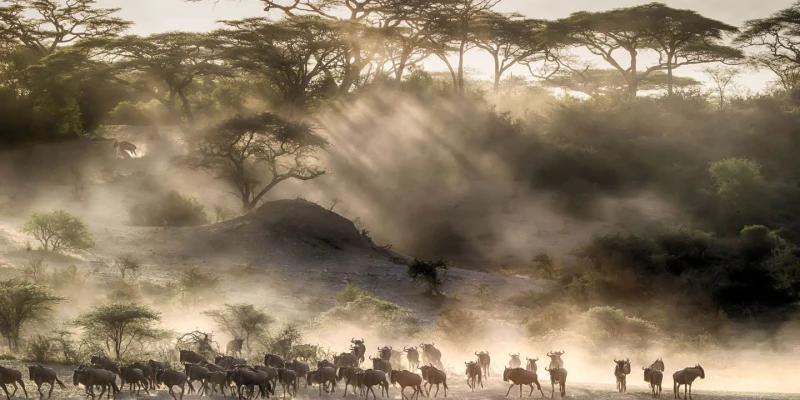
The Great Wildebeest Migration is one of the most spectacular wildlife experiences in the world, taking place across the Serengeti ecosystem in Tanzania. Over two million wildebeest, zebras, and gazelles move in search of fresh grazing and water, creating dramatic and ever-changing safari scenes.
During the migration, visitors can witness thrilling river crossings, especially at the Mara and Grumeti Rivers, where animals face strong currents and predators such as crocodiles. In the southern Serengeti, the calving season brings thousands of newborn wildebeest, attracting large numbers of predators and offering intense wildlife interactions.
The best time to experience the migration depends on the season, with river crossings typically between July and October, and calving season from December to March.
A safari during the Great Migration offers unforgettable game viewing, dramatic landscapes, and one of nature’s greatest wildlife spectacles.
Tanzania safari packages can be customized to suit your preferences, offering flexible itineraries, pricing options, and unforgettable wildlife experiences across the country’s top safari destinations.
Why Experience the Migration in the Serengeti?
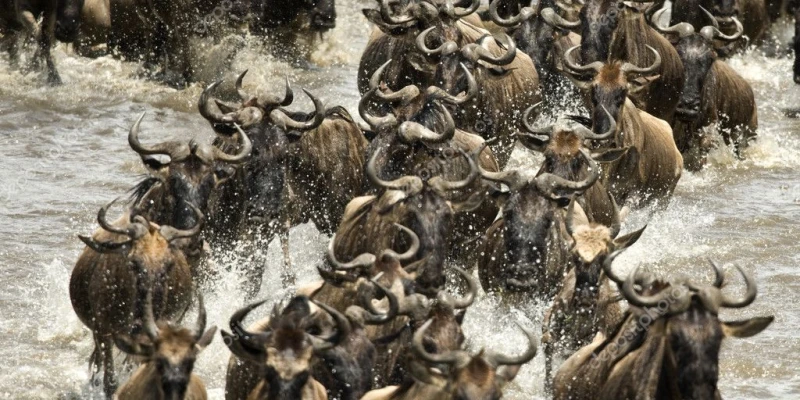
The migration is a dramatic and continuous cycle filled with challenges such as predator encounters, including lions and massive crocodiles during river crossings like the famous Mara River crossings. Your safari package typically includes transport in a custom built 4×4 safari vehicle with a pop-up roof for optimal wildlife viewing.
Most itineraries combine key regions such as:
Seronera (Central Serengeti) excellent year-round wildlife viewing
Kogatende (Northern Serengeti) famous for river crossings
Maasai cultural visits and Big Five game drives
Best Time to See the Migration
July – October:
Dry season and the best time to witness dramatic river crossings in the northern Serengeti.
December – March:
Calving season in the southern Serengeti and Ngorongoro area, where thousands of wildebeest are born daily.
Low viewing months (transitional periods):
November, April, May, and June, when herds move between regions and are harder to locate.
Interesting Facts About the Migration
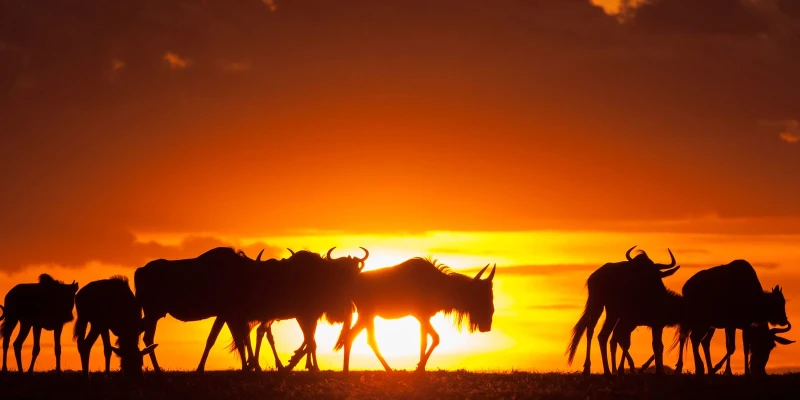
The migration follows rainfall patterns. Calving takes place in the southern Serengeti (Ndutu) between December and March. As rains shift, herds move northwest toward the western corridor and Lake Victoria, then north into the Maasai Mara in Kenya.
During river crossings at the Grumeti and Mara Rivers, wildebeest face major dangers from crocodiles and predators. After grazing in the Maasai Mara, the herds return south when the short rains begin, completing the cycle and restarting the calving season.
This continuous movement makes the Great Migration one of the most extraordinary wildlife spectacles on the planet and a highlight of any Tanzania safari package.